Sharp Rise in Business Uncertainty Revealed by Bank of France Survey
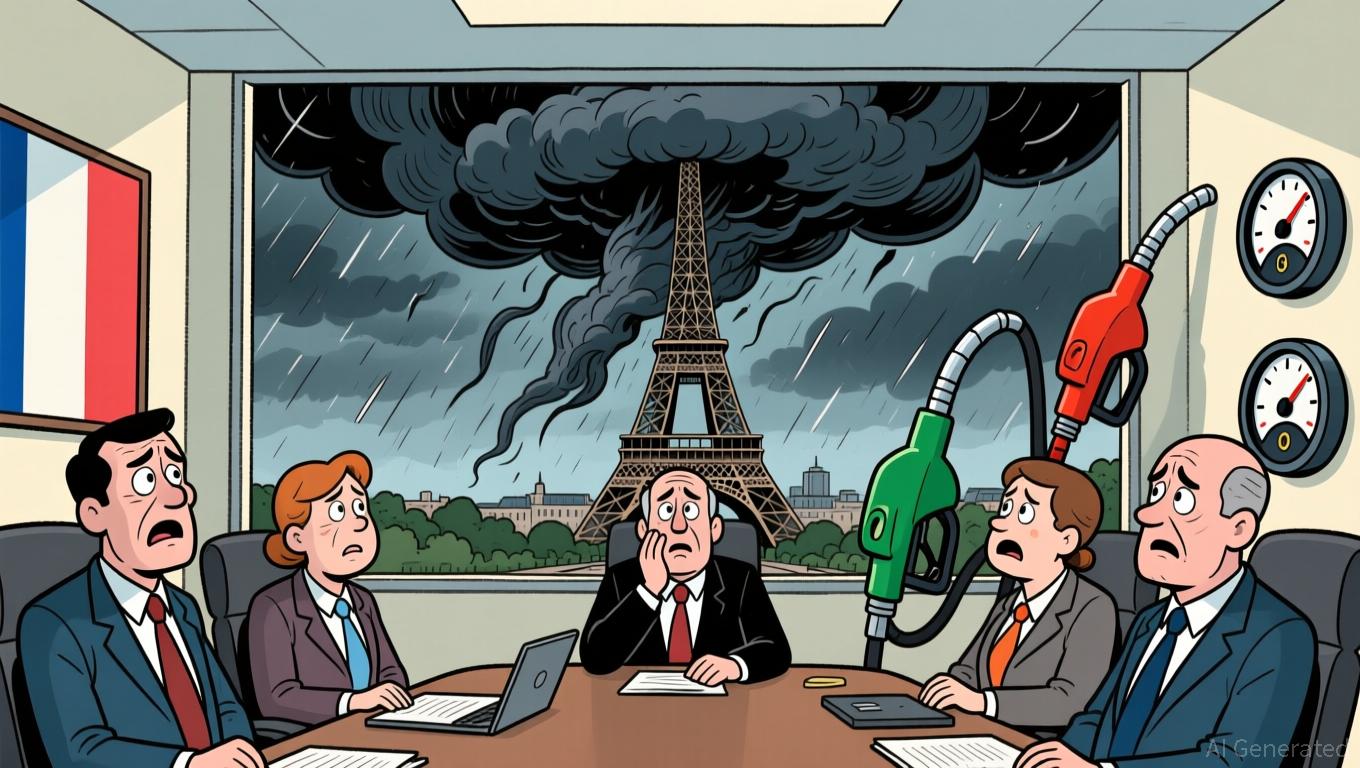
French business executives turned abruptly more cautious in September. The Bank of France's monthly survey, which works by reading the language of responses from about 8,500 companies, found uncertainty in industry and services at its most acute since April and the construction reading at its highest since March. The central bank attributed the jump to fuel prices and a deterioration in the economic outlook.
That reading matters to investors precisely because of what it has not yet done: France is holding its breath, not falling over. The Bank of France left its third-quarter growth forecast unchanged at 0.1%, said activity advanced in industry and accelerated in services, and Governor Emmanuel Moulin reported "no signs of broad-based pass-through to prices." Only 13% of industrial firms raised prices in September, barely above the roughly 10% that typically do at this time of year. The survey is the landfall of a storm that has reached business confidence but not yet output, prices, or hiring.
A business-uncertainty reading is a leading indicator: it describes intentions before they become orders, spending, and payrolls. So the question a U.S. investor should care about is which of those will be hit next - and the answer decides whether this stays a European footnote or becomes a signal that moves European equities, the euro, and the American companies that sell into Europe.
The external shock behind the survey is energy. The U.S.-Israeli campaign against Iran has disrupted shipments through the Strait of Hormuz, and the U.S. Energy Information Administration now expects Brent crude to average about $105 a barrel in the fourth quarter, up $14 from its forecast a month earlier. Crude has climbed more than 37% since the fighting began in late February. That is the fuel-price worry now visible in French business sentiment.
The second shock is domestic and largely self-inflicted. France's presidential election arrives in May, closing out a decade of Emmanuel Macron's centrist rule, and the two candidates currently tracked to reach the run-off - the far-right Marine Le Pen and the hard-left Jean-Luc Mélenchon - each promise wholesale changes to economic policy. Businesses have responded with a wait-and-see attitude: postponing projects, delaying orders, and households trimming their spending.
The trouble is where that wait-and-see attitude lands. France reaches this period carrying one of the largest budget deficits in the eurozone. Its 10-year government bond yield has traded above 4.8%, the highest in more than two decades, and the premium investors demand over German Bunds has widened to its most since the 2011 debt crisis. Public debt has climbed to roughly 119% of GDP - near double the European Union's 60% target - while the government's plan to narrow the deficit depends on about €54 billion in spending cuts. And the two run-off favorites are the least likely to approve austerity.
The mechanism that makes this survey dangerous is the one the Bank of France's own numbers point to: the energy cost is currently being absorbed in corporate margins, not passed through to consumer prices. When input costs jump while only a slightly larger share of firms than usual raise prices, the difference lands on profit margins, not on the price index. Deferred investment and cautious demand then feed back into weaker tax revenue, at the exact moment France's borrowing costs are near record highs.
There are two roads from here, and they pull policy in opposite directions. If fuel prices begin to show up in broad inflation, the European Central Bank - which investors already expect to push its deposit rate from 2.50% toward roughly 3.2% by late 2027 - would have reason to tighten further, raising France's funding costs. If instead the energy shock stays trapped in margins and demand, growth slows and the deficit worsens on its own. Either way the burden lands on the most fragile sovereign in the euro area during a campaign.
The strongest counterargument is that sentiment is not action, and the evidence for it is real. France's composite purchasing managers index entered expansionary territory in September for the first time that year, and the country's relatively low dependence on imported fossil fuels insulates it from energy shocks better than neighbors such as Germany. Governor Moulin described the economy as "holding up." If crude stalls and the wait-and-see posture rotates back into ordering, this survey could read as a footnote by year-end.
That tension is the test to watch. For a U.S. investor, the exposure runs through the euro - a weaker France works against the currency and trims the translated revenue of American multinationals - and through European equities whose earnings rely on regional demand holding up. The evidence that will settle the question arrives in the next surveys: whether deferred projects convert into measurable cuts in capital spending and hiring, and whether the fuel-cost squeeze starts appearing in the price data the ECB actually acts on. France's bond spread, meanwhile, is the visible scoreboard for how much room the market thinks the country has left.