Uncle Nearest Whiskey Brand Eyes Potential Sale Amidsettlements
A court-appointed receiver is steering Uncle Nearest, the Black-owned Tennessee whiskey brand named after the man who taught Jack Daniel to distill, toward a sale. In late May the receiver signed a nonbinding letter of intent to sell substantially all of the company's assets to an unnamed investment firm with Black ownership, a deal that still needs a federal judge's approval. The buyer is unidentified, the price has not been disclosed, and a pending federal investigation hangs over the process - so the word "potential" is doing real, unresolved work.
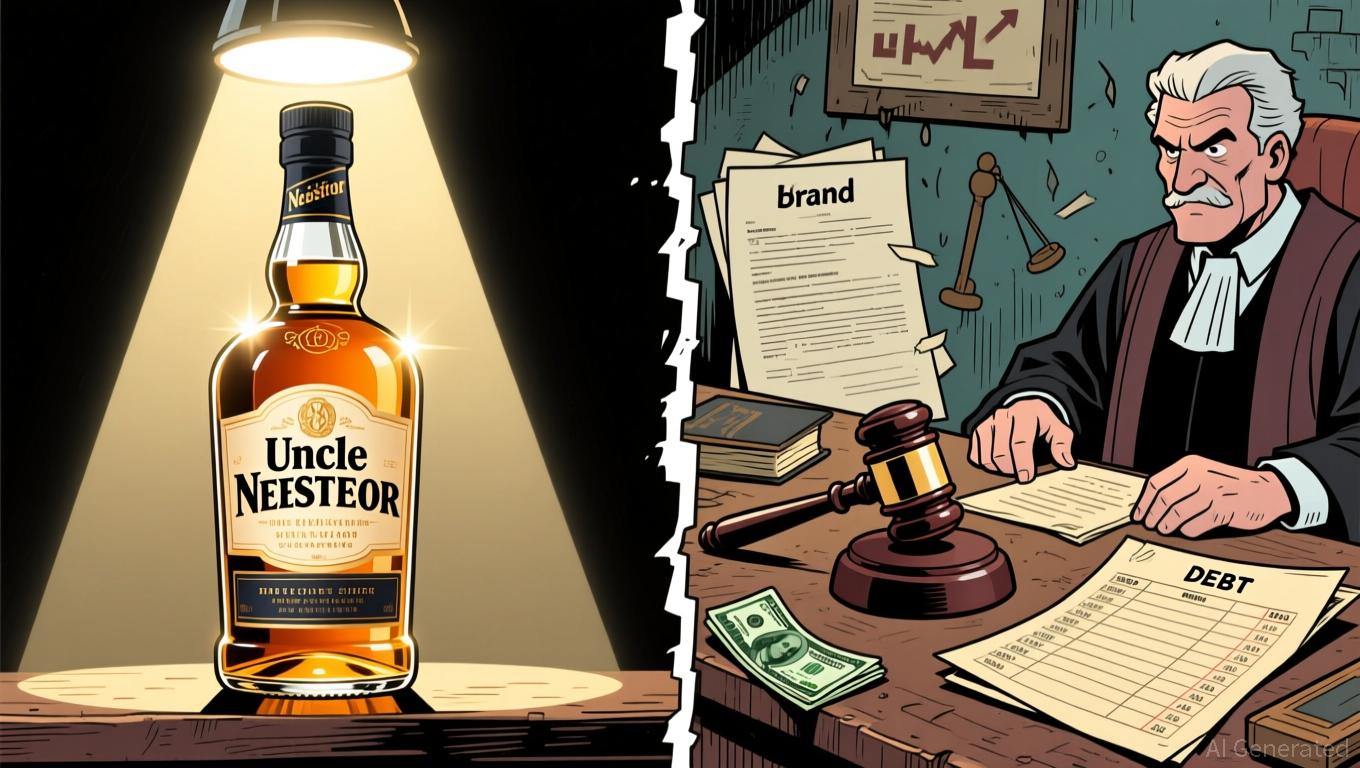
For an investor, the striking fact is not that a celebrated brand is changing hands. It is the distance between the label Uncle Nearest once carried and the machinery now dividing it up. The brand was reported as valued around $1.1 billion in 2024 and discussed as a unicorn, yet it was accused of defaulting on more than $108 million in loans and, by its own court-appointed receiver's account, would have stopped operating within a month without the lender's continued cash support and deep cost cutting. When a "billion-dollar" brand is being sold off by a court, the useful question is what actually decides who gets paid - and what the brand is really worth.
A valuation and a cash balance are different things
Start with what the "$1.1 billion" actually was. Uncle Nearest was founded in 2017 by Fawn Weaver and her husband Keith, built to honor Nathan "Nearest" Green, who is widely described as the first known Black master distiller in American whiskey. By early 2024 the company had raised about $225 million and Forbes had pegged its value near $1.1 billion, with Weaver's personal stake estimated near $470 million. The brand reached 30,000-plus storefronts across a dozen countries and drew roughly 200,000 visitors a year to its Shelbyville, Tennessee distillery.
That number - a privately negotiated figure - described what equity owners and early investors thought the company was worth. It was not cash sitting in the business. The lender, Farm Credit Mid-America, sued in July 2025 claiming the company had defaulted on more than $108 million in loans, diverting funds to buy a Martha's Vineyard property and overstating the whiskey barrels pledged as collateral. In mid-August a federal judge appointed a receiver, giving a court-chosen outsider control of the assets. A forced sale follows a debt problem, not a branding problem.
A receivership sale is a claims process, not an IPO
This is the part that matters for investors. A receivership is not a merger where everyone shares in a rising business. It is a mechanism for a creditor to get paid: the assets are sold, and the proceeds go out in a strict order. The secured lender's claim sits first in line. Unsecured creditors and tax authorities come behind it. Equity - the founders and anyone who bought into the "unicorn" story - is residual, paid only from whatever is left over.
That ordering explains the shape of the outcome. The company is not even being sold by its owners. The receiver, Phillip G. Young Jr., signed the letter of intent and will need the court to sign off on any final purchase agreement. The proposed buyer intends to keep the existing workforce in place, honor Green's legacy, and keep producing the whiskey - all part of protecting what little brand value is tradeable. But none of that tells you what the equity is worth, because the equity is only entitled to what survives the debt.
Why the price is unknown, and discounted
The most revealing number in this saga is not the $1.1 billion; it is the roughly $529 million enterprise value the founders themselves cited against the debt. Even on their own optimistic framing, about a fifth of that figure was spoken for by the secured claim, and the cushion has shrunk through the dispute. A bidder in a receivership has every reason to discount what it will pay.
The record explains why. In a spring report the receiver said the company had not filed federal income tax returns since 2018, that a substantial amount of financial records predating 2024 had allegedly been erased from company systems, some of them recovered, and that operations had only reached cash-flow neutrality after cutting 38% of the workforce. The lender alleged the barrels pledged as collateral had been overvalued by about $21 million. By June the receivership had hired a law firm to respond to a federal investigation whose scope it did not disclose. A buyer taking on those assets is buying a working distillery and a recognizable name, but it is also buying an unresolved balance sheet, a contested inventory valuation, and legal uncertainty. All of that gets priced into a bid before any court approves it.
What a retail investor should actually take from this
There is no public ticker here - Uncle Nearest was private, and retail investors had no direct equity stake to protect. That absence is itself the lesson, not an inconvenience. The story shows, cleanly, the difference between a valuation and a recovery. A $1.1 billion mark, set by sellers and their investors, says almost nothing about what a forced sale will clear. What matters is the debt in front of the equity, the quality and ownership of the collateral, and the discount that pending investigations and disputed books extract from a bid.
The same logic transfers to any company you consider: check the balance sheet before you believe the growth story, ask who holds claim priority, and remember that a headline valuation is a belief about the future, not cash you can count on.
The next evidence will come from the court room, not the shelf. Watch for the receiver to ask the judge to approve a purchase agreement and for the sale price to become public. Whether that price clears the more than $108 million the lender alleged it was owed decides whether there is anything left for anyone behind the lender - and that, not the round number the brand once wore, is what the business is actually worth.