Hong Kong's Cheap Solana ETF Pays You No Yield
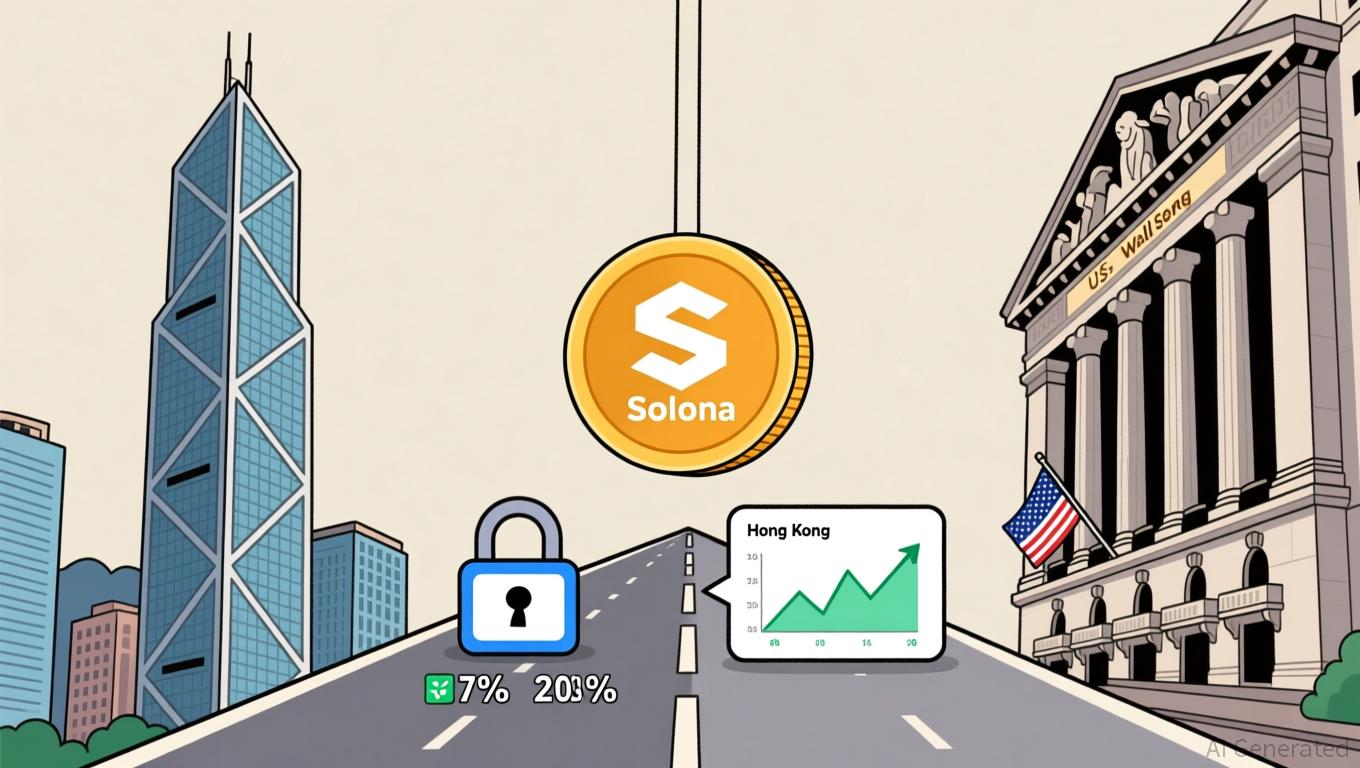
Pando Finance is set to list its spot Solana ETF on the Hong Kong Stock Exchange on October 13, becoming the city's second such fund and its cheapest - a 0.6% annual management fee against roughly 1% for the ChinaAMC Solana fund it follows. Read as a headline, that is heartening: more Solana exposure, and cheaper. But the fee tells you almost nothing about what this product is actually worth, because Pando's fund holds Solana without staking it. It pays shareholders no yield at all. In the United States, meanwhile, the newest Solana ETFs exist precisely to pass along a roughly 5% staking yield. Same coin, two fundamentally different investments.
Staking is the part that trips up beginner investors, so it is worth spelling out. Solana, like Ethereum, runs a proof-of-stake network: owners pledge ("stake") their coins to validators who secure the chain, and are paid in new coins for doing so. It is roughly the crypto version of earning interest on a deposit, and on Solana that reward has run in the neighborhood of 5% a year. A fund that stakes passes that yield to shareholders; a fund that does not keeps the exposure but hands the yield back. Pando's ETF, which trades under the ticker 02831 and holds Solana with HashKey as custodian, explicitly does not stake, uses no leverage, and pays no dividends.
Set the two regions' products side by side and the wrapper, not the coin, sets your return. The U.S. clearing the way for staking Solana ETFs this fall - Bitwise's was the first, offering the yield - made that an option. Hong Kong's Pando fund declines it. So the investor who buys the Hong Kong fund gets full Solana price swings but none of the interest; the investor in a U.S. staking fund gets the swings plus the yield, minus that fund's own fee.
Now the fee comparison that sounds so attractive stops making financial sense. Even by the terms in its own fund documents, Pando's ETF is not the 0.6% product the headline suggests: estimated total ongoing charges come to about 1.6% a year once custody, administration and the rest are included, versus roughly 1.99% for ChinaAMC's comparable fund. Whether you choose one Hong Kong fund or the other saves you a few tenths of a percent. The yield difference between staking and not staking is several percent every year, and it compounds. On a total-return basis, a fund that looks cheap because it undercuts its local rival is not cheap at all relative to a fund on the other side of the Pacific that pays you the interest.
For a U.S. retail investor, this cuts two ways, and the honest part is that the Hong Kong product is barely on your menu: a fund listed on the Hong Kong exchange trades in Hong Kong dollars, and most U.S. brokerages do not hand a beginner easy access to it. What this listing is, more than an opportunity to buy, is an edge case that shows where the category is heading. Spot Solana ETFs now hold roughly $1.9 billion in net assets globally, with Solana pegging cumulative inflows near $1.61 billion, even as U.S. funds of the non-staking sort have lately posted outflows. The product category has moved past the question "does a Solana ETF exist" - it exists in both the U.S. and Hong Kong now - and into the question that actually decides what you earn: which wrapper, which jurisdiction, whether it stakes, and what it really charges.
That is the shift worth watching from here. Hong Kong approved its first spot Solana ETF back in October 2025 and chose a yield-free version; the U.S., where the first staking Solana ETF began trading this fall, now offers a product built around the staking yield. Neither is wrong - staking if you want income and can stomach the network risk, not staking if you want clean price exposure - but they are different products wearing the same name. When you see an "ETF" headline, the number that does not appear in it - the staking yield, and the true fee behind the marketing number - is the number that determines what you actually keep. This listing is a small, useful reminder that in a maturing market, the asset you own has become the least interesting part of the trade.