When Oil Rises and Chips Fall the Same Day, It Isn't One Market Mood
Make no mistake, the board was genuinely split. On Thursday, October 8, crude jumped - front-month WTI settled up 3.6% and Brent up 4.1% - on attacks on Gulf shipping and hurricane-driven shutdowns of U.S. output. And on that same tape, energy stocks led the S&P 500's gainers while the technology sector took the steepest loss of the 11 major S&P 500 sectors, dragged down by semiconductors. The Nasdaq fell most, two days after a record close.
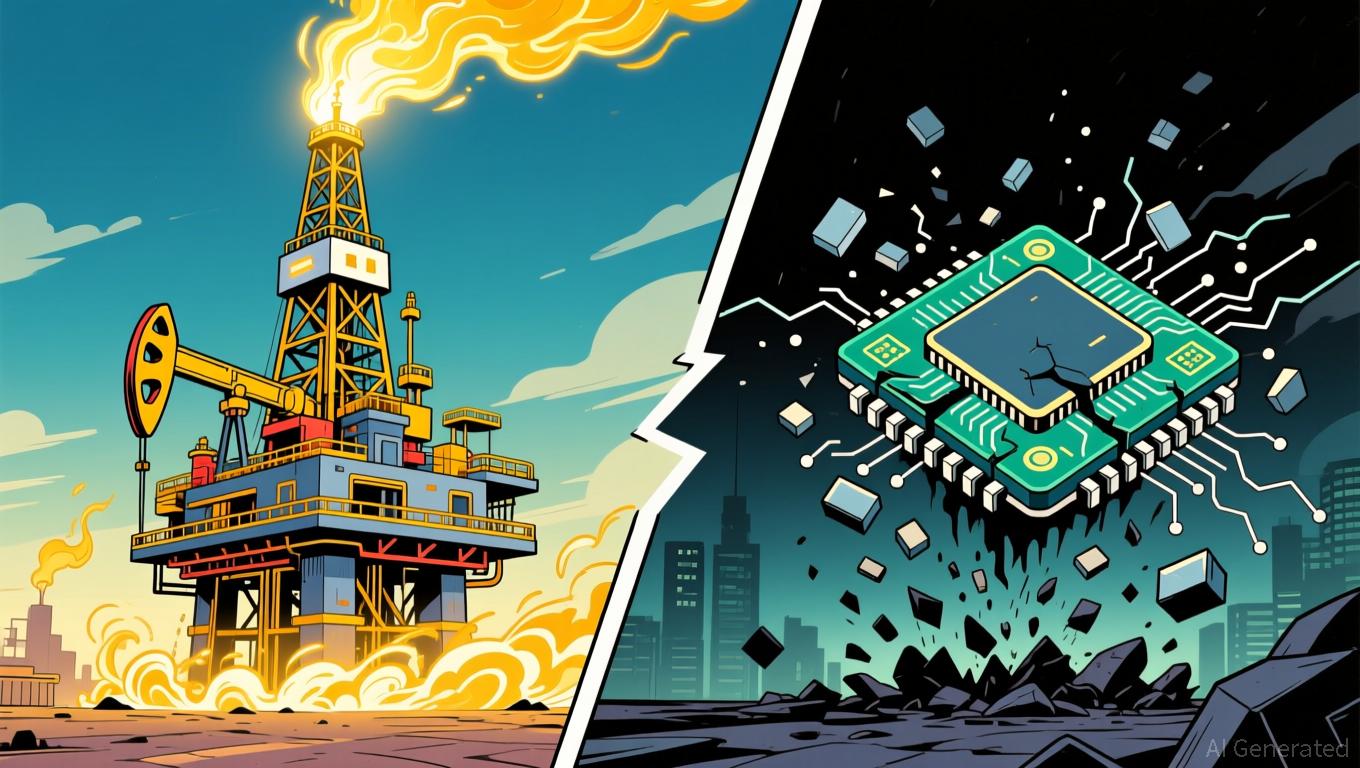
That split is the tell worth learning. The instinct is to read "oil climbs" and "tech falls" like one weather system moving the whole board. It is not. A commodity price is a transfer between income statements, and which side of that transfer you own decides whether the news is good for you. For a growth stock, higher oil is a cost and a rate worry: it feeds inflation expectations, pushes yields up - the benchmark 10-year Treasury has been near its highest level since 2002 - and a longer stream of future earnings gets marked down the hardest. That is why the Nasdaq, the most long-duration index, took the worst of it. For an oil producer, the same dollars are revenue; realized price lands straight in operating cash flow. That is why energy led.
But don't hand the semiconductor selloff all that credit, either. Part of it was a different, narrower story: China's CXMT reported progress in advanced DRAM, a competitive threat aimed squarely at Micron and the memory-chip makers, and Chinese chipmakers are seeking to triple domestic AI chip output to lean off Nvidia - pressures on memory and Nvidia exposed names, not the whole chip complex. Separately, after the day's trading, the SOXX sector fund fell about 5% in a week, its worst stretch in a month. Add an OpenAI-revenue miss and fears over enormous tech borrowing - pressures weighing on particular chipmakers and megacap names - and the headline pairing of "oil up" with "chips down" starts to look less like one shared mood and more like several distinct negatives that happened to land on the same day.
The deeper discipline is the gap between a price and what a company books. The headline number is spot crude above $100 a barrel, with Brent settling above $104 on October 8 and WTI near $91. What a producer actually books is the realized price it can turn into cash flow, and for how long it can keep it. The energy leadership here is not pure momentum: a disciplined producer like EOG Resources beat estimates on both profit and revenue last quarter, and its free cash flow is growing faster than its top line, on a balance sheet carrying little debt. The trouble is that a large fraction of today's $100-plus is a war-and-storm premium - U.S. crude is up well over half in 2026 on the Iran conflict, and this week's pop rested on shipping fears in the Strait of Hormuz and Gulf of Mexico shut-ins. A premium that hangs on fear can snap back far faster than it built.
So a durable read has a two-step shape. Energy's rise is cash-flow-backed, not momentum noise - that leg of the market is not mispricing the obvious. The lasting edge goes to producers whose booked cash flow and balance sheet still hold at $70, not ones whose value assumes $100 holds forever.
Watch how crude behaves as the shipping-tension premium unwinds and Gulf output restarts. If it needs fresh attacks to stay near $100, that was fear; if demand and durable tightness hold it, that was real. The whole skill compresses into one move: when a headline folds "oil up" and "tech down" into a single mood, follow the number to the income statement - whose revenue, whose cost, and whether it lasts. Own the cash flow, not the headline.