QXO at $11: The 60% Drawdown Reset the Price, Not the Problem
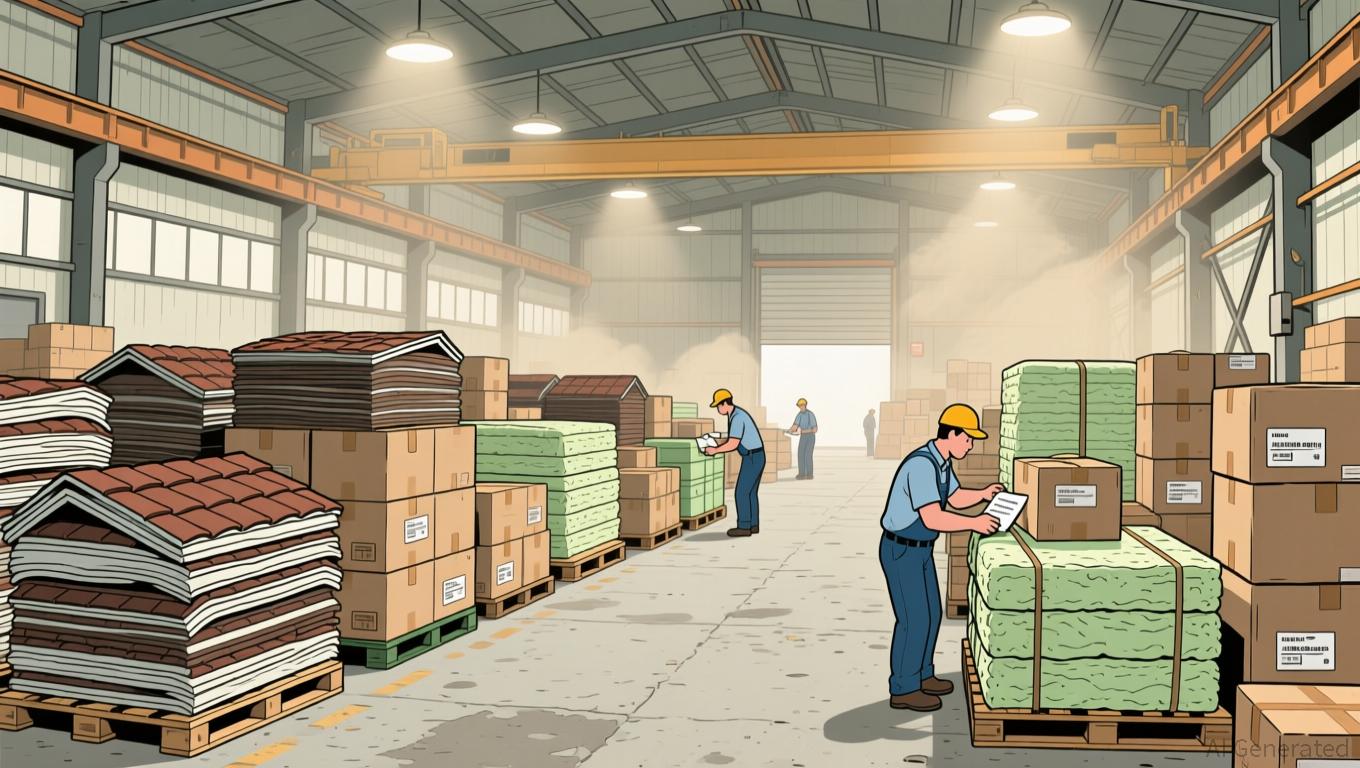
Brad Jacobs built QXO the way he built XPO Logistics: buy a fragmented industry one business at a time and let scale do the work. In the two years since it became a real operating company, the roll-up has swallowed Beacon Roofing, a major U.S. roofing distributor, then Kodiak Building Partners, and agreed to buy TopBuild, an insulation leader, for $17 billion. Revenue went from a shell that did roughly $15 million a quarter to about $9.9 billion over the trailing twelve months. This is a plain, understandable business - distributing roof shingles, lumber, waterproofing and insulation to contractors - wrapped in an aggressive, debt-funded roll-up.
That story carried the stock to a 52-week high near $27.61. It has since fallen about 60%, to around $10.50, a fresh low, as residential roofing demand went soft and Wall Street grew impatient with the losses. One recent investor letter even called the drawdown an asymmetric 37%-annualized opportunity.
Before you treat a 60% drop as a bargain, it is worth asking what the market is actually paying for the company right now. The answer is more than the business currently produces - a lot more.
The stock carries a market capitalization of roughly $10.9 billion, and Ainvest data put trailing-twelve-month free cash flow at about $141 million. Now run that in reverse: for the shares to be good value at even a modest 10x free cash flow, the market cap presupposes QXO producing about $1.1 billion of annual free cash flow - roughly eight times what it actually prints today. That gap, not the drawdown, is the real story. A 60% collapse reset expectations from absurd to merely hopeful; it did not make the company cheap against its present cash generation.
The gap is two fixable problems, not one broken business
Current earnings are depressed by two things that are supposed to get better. First, the residential housing market. CEO Brad Jacobs calls it the doldrums, and management expects only a slow recovery through 2027. Second, integration: QXO has strung together Beacon, Kodiak, and now TopBuild in eighteen months, with heavy distributor inventory and weak roofing-and-wallboard prices plus higher fuel costs pinching margins. Operating margins are negative, and QXO booked a $55 million net loss in the second quarter even on $3.25 billion in sales.
Believe both improve, and the current price roughly makes sense. RBC Capital, which still rates the stock Outperform, cut its 2027 EBITDA estimate to $1.85 billion from $2.25 billion; Wall Street consensus sits near $2.2 billion. Convert half of that EBITDA into free cash flow and you land near $1 billion - almost exactly what the $10.9 billion market cap already prices in at 10x. In other words, at $11 the market has already banked the normalized turnaround. The asymmetric part of the pitch depends on beats, not on the current multiple being too cheap.
What would prove the bet right or wrong
That is the honest frame: QXO is a real business at roughly a fair price, and the outcome now turns on whether a billion dollars of cash flow actually arrives. It fails if free cash flow does not inflect - if the roofing downturn lingers through 2027 on management's own timeline, if analysts keep cutting EBITDA estimates as they just did, or if the debt load forces QXO to slow the acquisition engine that justified the high multiple in the first place. RBC explicitly notes the company needs time to reduce its debt before it can keep buying. Under any of those conditions, the current valuation has no floor near $11.
Distribution is a genuinely cash-generating model, and Jacobs' record at XPO is why this trade draws attention at all. But a falling stock is not the same as a reset valuation. The 60% drawdown converted an impossible price into roughly a fair one, and fair is where you are sitting. Watch the quarterly numbers rather than the share price: whether EBITDA and free cash flow climb toward that $1 billion-and-up range as housing recovers, and whether the leverage comes down. If they do, $11 was the entry. If they do not, the stock does not need to get much cheaper to keep falling, because the downside is real. The numbers will decide, not the depth of the drawdown.