Chipotle Lost Half Its Value. The One Man Who Could Fix It Just Said No.
On Thursday, a rumor was worth billions. The Financial Times reported that Starbucks had been working with advisers on a takeover proposal for Chipotle Mexican Grill, and Chipotle's stock jumped as much as 8% in a day - a market value around $41 billion. The market read it as a reunion: the operator returning to the asset he had already saved once. By Monday the reunion was off. "Starbucks is not buying Chipotle," a spokesperson said, and Chipotle shares slipped, surrendering a chunk of Thursday's pop while Starbucks rose more than 1%.
The five words of the denial mattered less than the ledger underneath them. Because this takeover was never about pouring coffee into burritos. It was the market asking a question it has been asking since August 2024: Chipotle, whose stock has lost roughly half its value since the day Brian Niccol left, needs the one operator who demonstrably rebuilt it - and Niccol is now owned by a company that will not pay to send him back.
One Man, Two Ledgers
At the peak, the reversal was hard to see. Brian Niccol spent more than six years running Chipotle, pulling it out of its food-safety crisis and turning it into a fast-casual powerhouse. When he left in August 2024 to run Starbucks, Chipotle's stock halved. Traffic fell through 2025 as budget-conscious customers visited less often; same-store sales fell 2.5 percent in the fourth quarter of 2025. The brand that Niccol had built was, without him, leaking customers.
Meanwhile, the same man was running the opposite chart. Under Niccol, Starbucks reported same-store sales growth of 7.9 percent in its third quarter, above the 5.7 percent Wall Street expected - a turnaround, by his own test of footfall, taking hold. One man, two ledgers. The company that lost him went down. The company that hired him went up.
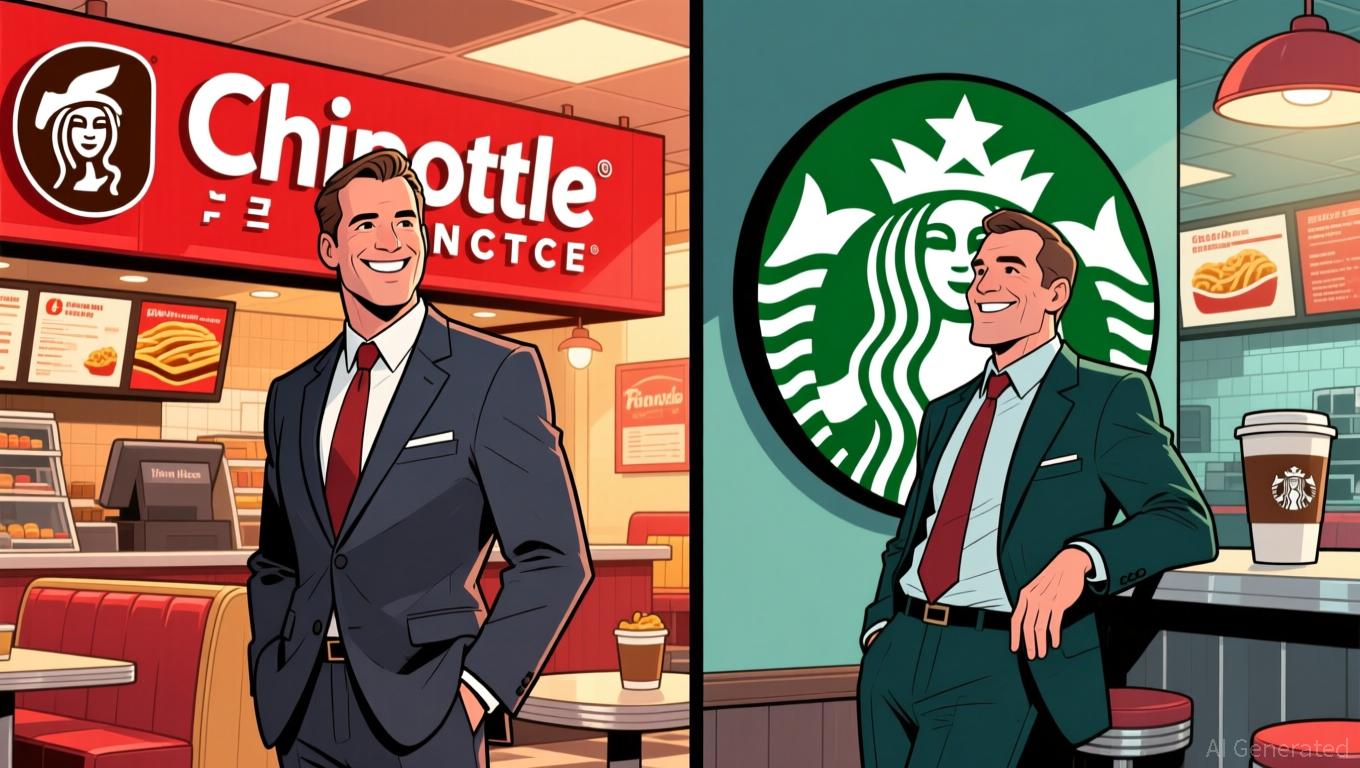
That collision is what made the rumor credible and why it moved so much money. A random takeover rumor is noise. This one named a bidder run by the exact person whose absence had cost Chipotle half its value - so the market priced the only fix that could arrive from outside. Chipotle holders hoped the reunion would come with a premium and Niccol's return. Starbucks holders, mid-recovery, worried the deal would be an expensive distraction written during their own turn. The denial chose the Starbucks ledger.
Notice the wording, because it is the hinge. Starbucks said it is "not buying" Chipotle - a narrower sentence than "we never explored it." The FT's core detail, that Starbucks had been working with advisers, was not flatly retracted. A purchase denied is not automatically an exploration denied. Denials are narrower than they sound, and the gap is information: a fair reading is that someone looked at the deal hard and then walked away.
The Premium That Pays for a Fix
Now separate the discount from the business, because they are different things. Chipotle's problem is not its finances. By Ainvest data it trades at roughly 17 times trailing EV/EBITDA, earns about a 48% return on invested capital, and carries net cash on its balance sheet - enterprise value is slightly below market cap. At about 23 times forecast earnings, the machinery is profitable and clean. The discount is the traffic story and nothing else: a restaurant company whose transactions fall is worth a takeover premium, because a premium pays for fixing exactly that.
That is the useful lesson in why this news moved the stock more than any quarterly report lately has. A takeover premium is a bet that someone can make the whole worth more than the sum of its restaurants - usually by restoring the footfall the current operators cannot. The rumor identified the person: the outsider with the most inside knowledge of the value walked up to the door and then did not cross it. When the bidder is denied, the premium evaporates. The marketplace had priced the fix and then been told no fix was coming from outside.
The owners were even preparing for a fight that never materialized. Earlier this month Semafor reported that Chipotle had hired advisers to defend against activist investors or an unwanted bid - a company girding itself for a battle that, on Monday, was called off before it began.
Who Owns the Second Act
So where does that leave the person who holds Chipotle today? The reunion premium is gone for good - that part is a settled, denied event. What remains open is the footfall question that the rumored buyer was going to answer for the market.
The encouraging line in the numbers: early 2026 sales have rebounded, and Chipotle's second quarter of 2026 brought revenue of $3.3 billion, up 9.3 percent. But shares have not believed the recovery yet, still a third below their 52-week high even after the 2025 slump was pushed into the price. That gap is the whole bet.
If same-store traffic keeps recovering, then ~23 times forecast earnings on a net-cash, high-return restaurant that is growing again is a de-rated compounding problem - a beaten-down multiple on a mending operator. If footfall stalls again, there is no bidder waiting on the other side to catch the fall. Starbucks, meanwhile, is focused on its own comeback and reports its fiscal fourth quarter on October 29.
That last sentence is the one Chipotle shareholders should read twice. The coffee chain's denial was the same sentence as its strategy - laser-focused on the turnaround it already owns - which is precisely why it will not buy something else's. The second act of Brian Niccol belongs to Starbucks. The first company he saved is left holding the operating problem, one footfall report at a time, with no one outside to rescue it. The rumor told you who could fix it. The denial told you who gets him.