Oil Rises as Escalating Middle East Conflict Poses Supply Risk
Brent crude rose about 1.8% to $106.65 a barrel on Monday, with West Texas Intermediate gaining 2.1% to $93.74, as tensions in the Middle East pushed deeper into what traders treat as supply-risk territory. The escalation was concrete rather than abstract: Iran-backed Houthi militants struck Saudi Arabia's King Khalid International Airport in Riyadh over the weekend, and a drone hit an oil tanker near Oman's Sohar anchorage, just off the Strait of Hormuz. The instinctive reading is simple - war means less oil, so prices rise.
That reading is only half the story, and the half that matters for an investor is the part a headline doesn't settle. The real question is whether today's price is buying physical scarcity that will persist, or paying a war premium for the risk of supply loss - a premium that can evaporate quickly if the conflict steps back. Those two states are easy to conflate and behave very differently, so the durability of this rally, more than its direction, is what is worth understanding. Every barrel is not worth the same depending on which driver is moving it.
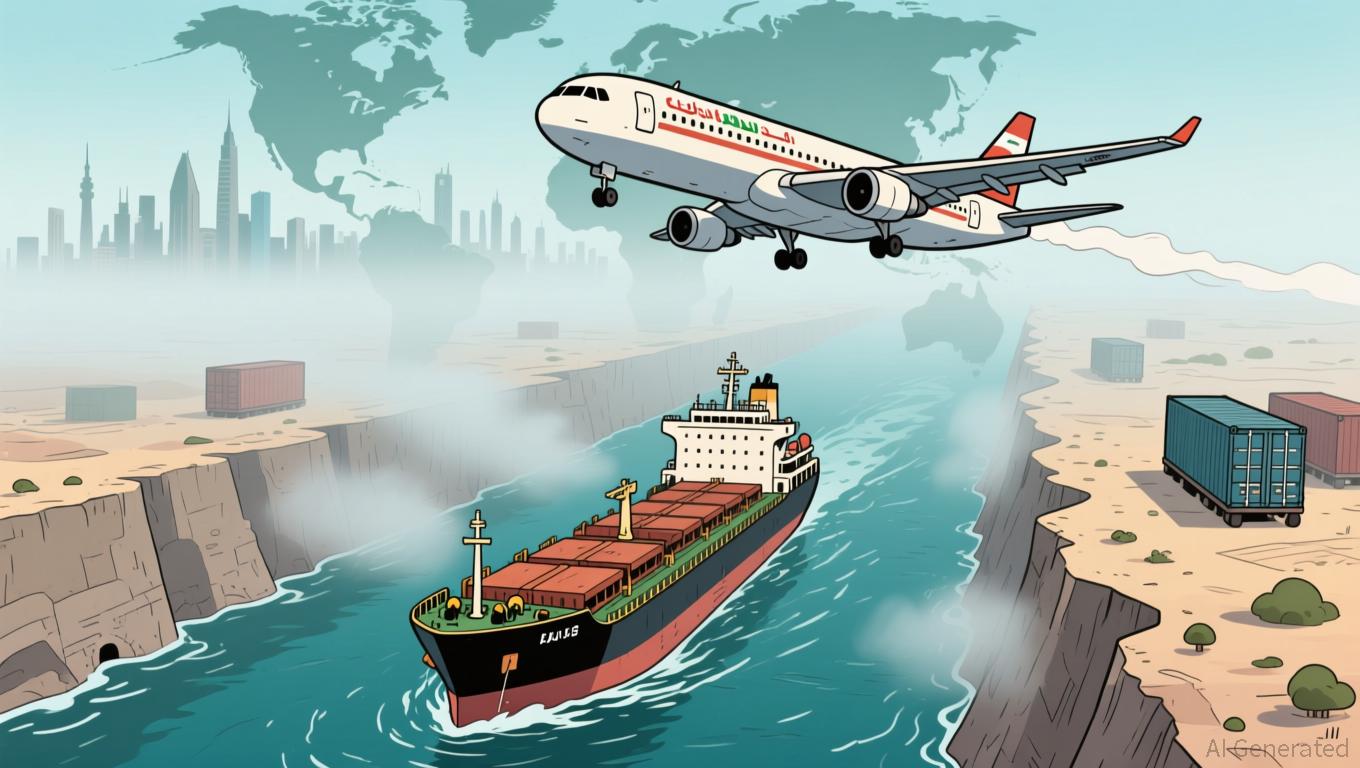
The physical damage is real, but it is narrower than a war narrative implies. The Strait of Hormuz ordinarily carries roughly a fifth of the world's oil, and the conflict that began in late February disrupted shipments through it. Global production is estimated to be about 4.5 million barrels a day off line. Yet the striking detail is that crude exports continue to move through the strait even as tanker traffic has fallen and attacks have multiplied. This is not a closed chokepoint; it is a damaged and expensive one. The shortage of barrels is genuine but partial, and the market's problem has become as much about moving oil as about finding it.
That logistics squeeze is where the physical reality shows up most clearly. J.P. Morgan estimates, cited by MarketWatch, put the cost of chartering a very large crude carrier from the Middle East to China at roughly $35 a barrel, up from about $3 in early 2026; the U.S. Gulf-to-China route runs near $41 a barrel versus $6 before the war. The world is also burning through its buffer. The U.S. Strategic Petroleum Reserve, per MarketWatch, held about 415 million barrels before the conflict began, and had fallen to roughly 282 million by early October. Refined products feel tightest of all: the U.S. Energy Information Administration expects retail diesel to stay above $6 a gallon this month, a price that reaches consumers and the inflation figures the Federal Reserve watches. That is the mechanism that turns an oil story into a macro one.
Ranged against that tightness is a visible effort to add supply back, and investors are deeply skeptical of it. Over the weekend President Trump announced an "energy ceasefire" between Russia and Ukraine and said Moscow had agreed to supply diesel to the United States, with an initial delivery of more than 300,000 tons. Were Russian barrels to arrive, the logic runs, prices would ease and the premium would shrink. In practice the arrangement is unconfirmed and contested - Ukraine initially said it knew of no such agreement, and Moscow's acceptance was reported only loosely - and as one market analyst put it, the market relies on physical barrels and logistics rather than political statements. An announcement does not repair a damaged refinery or unblock a congested shipping lane, which is why the premium is not yet coming out of the price.
The clearest statement of how much of this price is expected to fade comes from the EIA's own October outlook. The agency raised its forecast for fourth-quarter Brent to about $105 a barrel, up $14 from its prior estimate, reflecting the drawn-down stockpile and the tight diesel market. But for all of 2027 it projects Brent averaging closer to $84 - a level that says the disruption is a temporary repricing rather than a permanent new plateau. An investor can use that gap as a rough map: at a $105 barrel, the EIA is telling you part of the price is disruption that recedes, and the part above the implied recovery path is the premium a holder is betting on the conflict continuing.
So the productive way to read Monday's gain is as premium layered on tightness, and the investor's job is to track which layer is winning. The evidence that would confirm the durable version of the story is physical: freight costs staying elevated, inventories continuing to fall, and the conflict widening rather than contracting. The evidence that would break it is de-escalation: a ceasefire that holds, Russian barrels that actually arrive, or flows through Hormuz normalizing. Any of those would unwind the fear portion of the price far faster than the escalation built it. The price now depends more on the direction of the conflict than on the level of demand, and that dependency is both the opportunity and the risk in owning this rally.