How to Value Cyclical Stocks: The Trap of Trailing Ratios vs. Forward Earnings
Introduction
Investing in cyclical stocks—companies whose performance rises and falls with the broader economy—can be highly rewarding. However, these investments come with a unique valuation challenge that often traps even experienced investors. The core issue lies in how we measure value when earnings are volatile. In this article, we will explore the danger of relying on trailing ratios and explain why forward earnings offer a clearer picture for cyclical companies.
Core Concept Explanation
To understand this trap, we must first define two key terms. A trailing price-to-earnings (P/E) ratio is calculated by dividing the current stock price by the earnings per share (EPS) from the past twelve months. It is backward-looking. In contrast, forward earnings are estimates of what a company is expected to earn in the next twelve months. They are forward-looking.
Cyclical industries, such as automotive, steel, airlines, and commodities, experience boom and bust cycles. During an economic boom, these companies see massive profit spikes. During a recession, profits plummet or turn into losses. 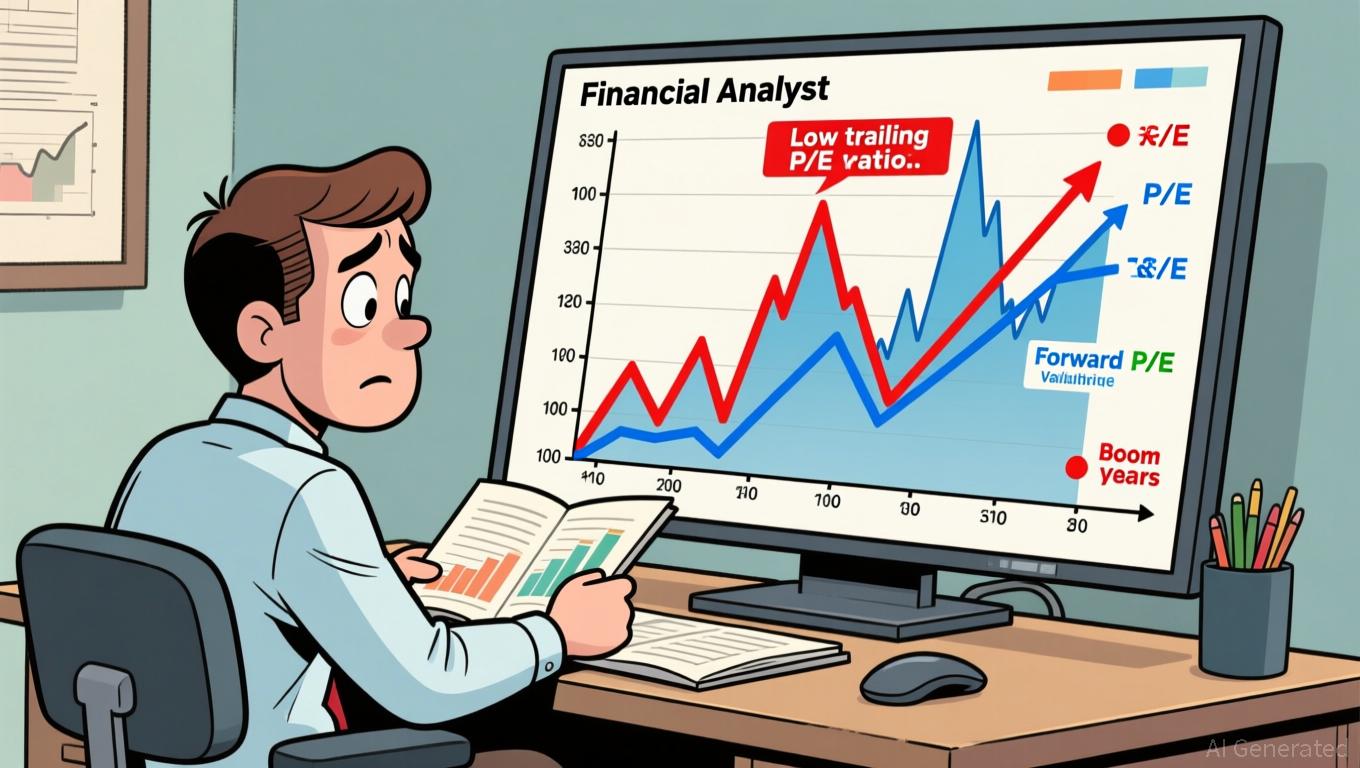 The trap occurs when investors look at a cyclical stock during a peak boom. The trailing P/E ratio appears incredibly low because earnings are historically high. This suggests the stock is cheap. However, this is an illusion. High earnings are often temporary. As the cycle turns downward, those high earnings will disappear, making the stock look expensive relative to its future reality.
Application and Strategies
Smart investors avoid the trailing P/E trap by focusing on normalized earnings or forward estimates. A common strategy is the "Peak-to-Trough" analysis. Instead of looking at the last twelve months, investors estimate what earnings look like at the bottom of the cycle. If you can buy a cyclical stock when the market is pessimistic about the trough, and sell when the market is euphoric about the peak, you capture the full cycle return.
Another approach is using the Price-to-Sales ratio. Since sales are often less volatile than earnings in the short term, this metric can provide stability. However, the most effective strategy is combining forward earnings estimates with a margin of safety. If a company is projected to earn $5 per share next year, and the stock trades at $50, the forward P/E is 10. This is a more honest valuation than a trailing P/E of 5, which might have been based on a one-time surge in profits.
Case Study Analysis
Consider the steel industry during the commodity super-cycle of the mid-2000s. Major steel producers reported record-breaking profits in 2007. Their trailing P/E ratios dropped to single digits, signaling to many retail investors that the stocks were undervalued bargains. Many bought in, attracted by the "cheap" valuation.
However, as the global financial crisis hit in 2008, demand for steel collapsed. Earnings turned negative. The stocks that looked cheap based on 2007 earnings suddenly became worthless or required massive capital raises. Investors who had relied on trailing ratios suffered significant losses because they failed to account for the inevitable downturn. Conversely, investors who looked at forward guidance and recognized the unsustainable nature of peak earnings avoided the worst of the crash.
Risks and Considerations
Relying on forward earnings carries its own risks. Analyst estimates can be overly optimistic, especially during economic upswings. There is also the risk of misidentifying a cyclical peak as a new growth era. To mitigate these risks, always cross-reference multiple data points. Look at balance sheet strength; can the company survive a winter with no profits? Diversify your exposure to different sectors to reduce the impact of any single cycle turning. Finally, maintain a long-term perspective. Cyclical investing requires patience and the discipline to sell when everyone else is buying, and to buy when everyone else is fearful.
Conclusion
Valuing cyclical stocks requires a shift in mindset from backward-looking data to forward-looking expectations. The trailing P/E ratio is a deceptive metric for companies with volatile earnings. By focusing on normalized earnings, understanding the economic cycle, and prioritizing forward estimates, investors can avoid the common trap of buying at the top. Remember, in cyclical investing, the best time to buy is often when the news is bad, and the best time to sell is when the earnings look irresistibly good.