Understanding Carry Trade Unwinding: A Guide to Market Volatility
In the intricate world of global finance, few phenomena create as much sudden tension as the "carry trade." For many investors, it is a strategy that promises steady, low-risk returns by borrowing in low-interest-rate currencies to invest in higher-yielding assets. However, when this popular strategy collapses rapidly, it can trigger significant market volatility. Understanding the mechanics of carry trade unwinding is essential for navigating these turbulent periods with confidence and clarity.
At its core, a carry trade involves borrowing money in a currency with a low interest rate, such as the Japanese Yen (JPY), and investing that capital in assets denominated in a currency with a higher interest rate, such as the US Dollar (USD) or Australian Dollar (AUD). 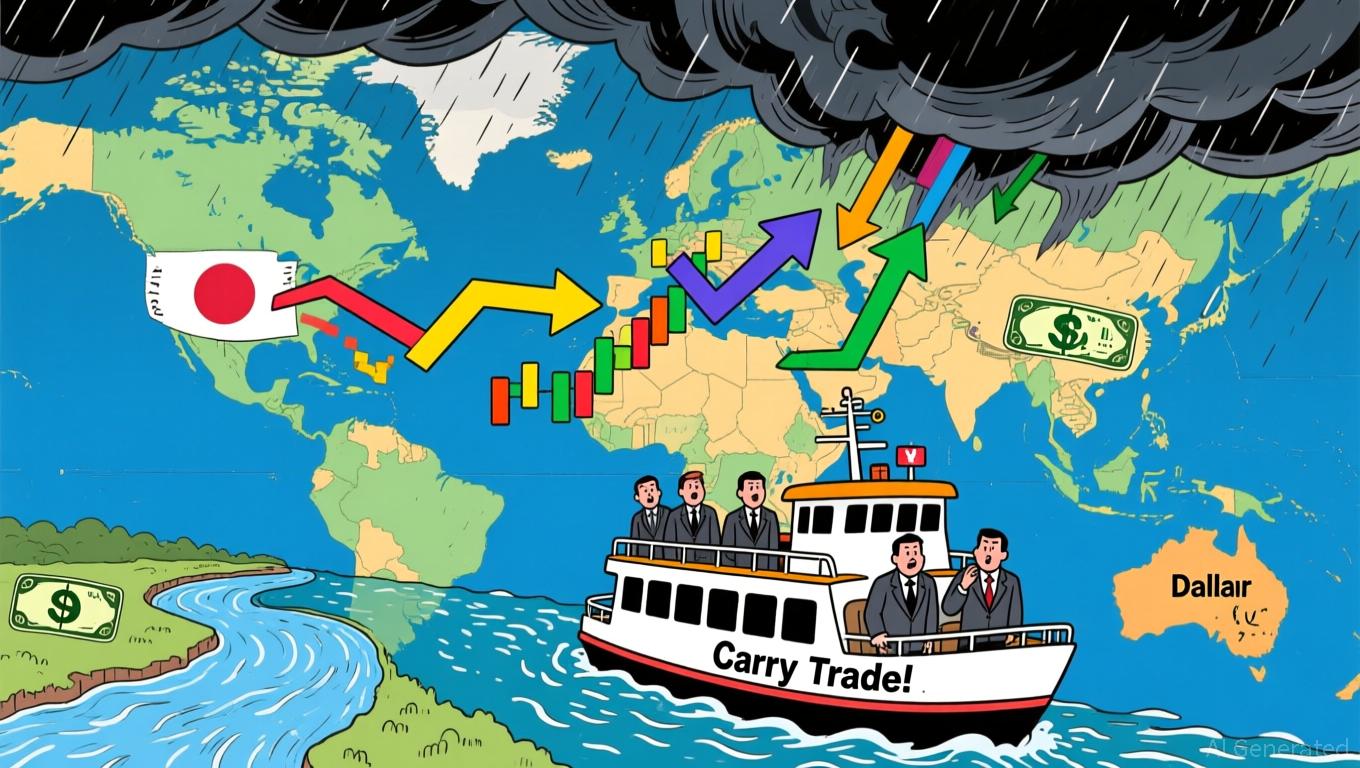 The profit comes from the difference, or "carry," between the two interest rates. For years, this strategy has been a cornerstone of institutional investing, providing a reliable stream of income with relatively low risk, assuming exchange rates remain stable.
However, the strategy relies heavily on two conditions: stable exchange rates and continued low borrowing costs. When these conditions shift, the carry trade can unravel quickly, a process known as "unwinding." Unwinding occurs when investors rush to close their positions to protect their capital. This typically happens when the borrowing currency strengthens or when interest rate differentials narrow. As investors sell high-yielding assets to buy back the cheap borrowing currency, the sudden surge in selling pressure can cause stock markets to drop and currency values to swing wildly.
For individual investors, recognizing the signs of potential unwinding is crucial for risk management. One key indicator is the widening of the interest rate gap between countries. If a central bank, such as the Bank of Japan, signals a move toward raising interest rates, the cost of borrowing decreases, making the carry trade less attractive. Additionally, watch for shifts in market sentiment. During times of global uncertainty, investors often flee risky assets and move toward "safe-haven" currencies, further strengthening the low-yield currency and triggering forced liquidations.
A prime example of this dynamic occurred in August 2024. For decades, the Japanese Yen remained weak due to Japan’s near-zero interest rates. However, when the Bank of Japan unexpectedly raised rates, the cost of borrowing Yen increased. Simultaneously, global fears about the US economy led to a stronger Dollar. The result was a massive unwind. Investors who had borrowed Yen to buy US stocks or Australian bonds suddenly faced higher borrowing costs and a stronger Yen, which reduced the value of their investments when converted back. This led to a sharp sell-off in global equity markets, particularly in Japan and emerging markets, demonstrating how quickly carry trade dynamics can impact portfolio values.
To mitigate these risks, investors should avoid over-leveraging their portfolios. Using excessive borrowed money amplifies losses when markets turn. Diversification is also key; holding assets in different currencies and regions can cushion the blow of a single currency’s appreciation. Furthermore, staying informed about central bank policies and global economic indicators can help anticipate potential shifts. Rather than trying to predict the exact moment of unwinding, focus on building a resilient portfolio that can withstand volatility.
In conclusion, while the carry trade offers attractive returns in stable times, its unwinding poses significant risks to market stability. By understanding the mechanics behind this strategy and monitoring key economic indicators, investors can better prepare for sudden market shifts. Remember, the goal is not to avoid all risk, but to manage it intelligently. Stay informed, diversify wisely, and maintain a long-term perspective to navigate the complexities of global financial markets successfully.